
Back Ground
WA Department of Health, Disaster Preparedness and Management Directorate (for the Western Australian Medical Assistance Team, WAMAT)
Muresk Institute, Northam, Western Australia
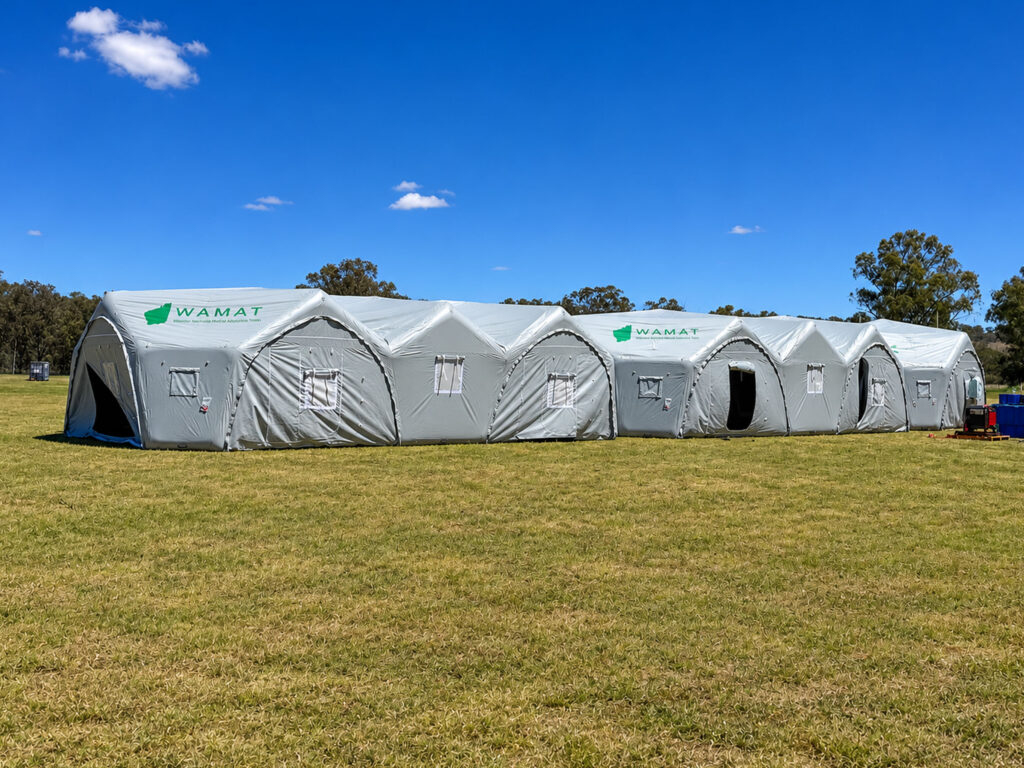
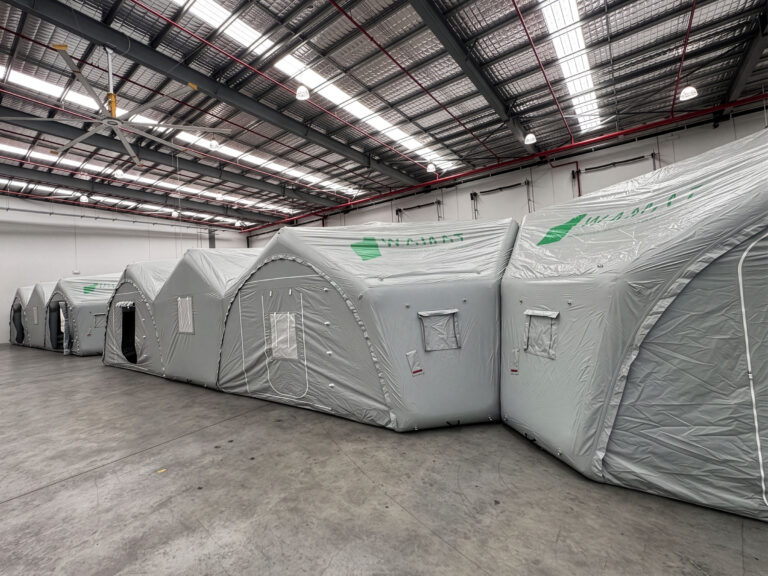
The Western Australian Medical Assistance Team (WAMAT) is a multidisciplinary civilian team that deploys at short notice to provide health support at disaster sites. The WA Department of Health’s Disaster Preparedness and Management Directorate had taken delivery of three XBeam inflatable shelters from Giant Inflatables Industrial (GII) to form the core of its field hospital: two 12 m units and one 6 m unit, configured as Resus, Emergency Care and Primary Care spaces.
When WAMAT held a two-day capability validation exercise at Muresk Institute, about 100 km east of Perth, GII owner David Abramowitch and Senior Industrial Designer Nick Palomares attended. The scope was threefold: deliver hands-on inflatable shelter training to the people who deploy the system, understand the team’s site-specific challenges, and see how the shelters perform once fitted out with real medical equipment.
Inflatable Shelter Training on the Ground
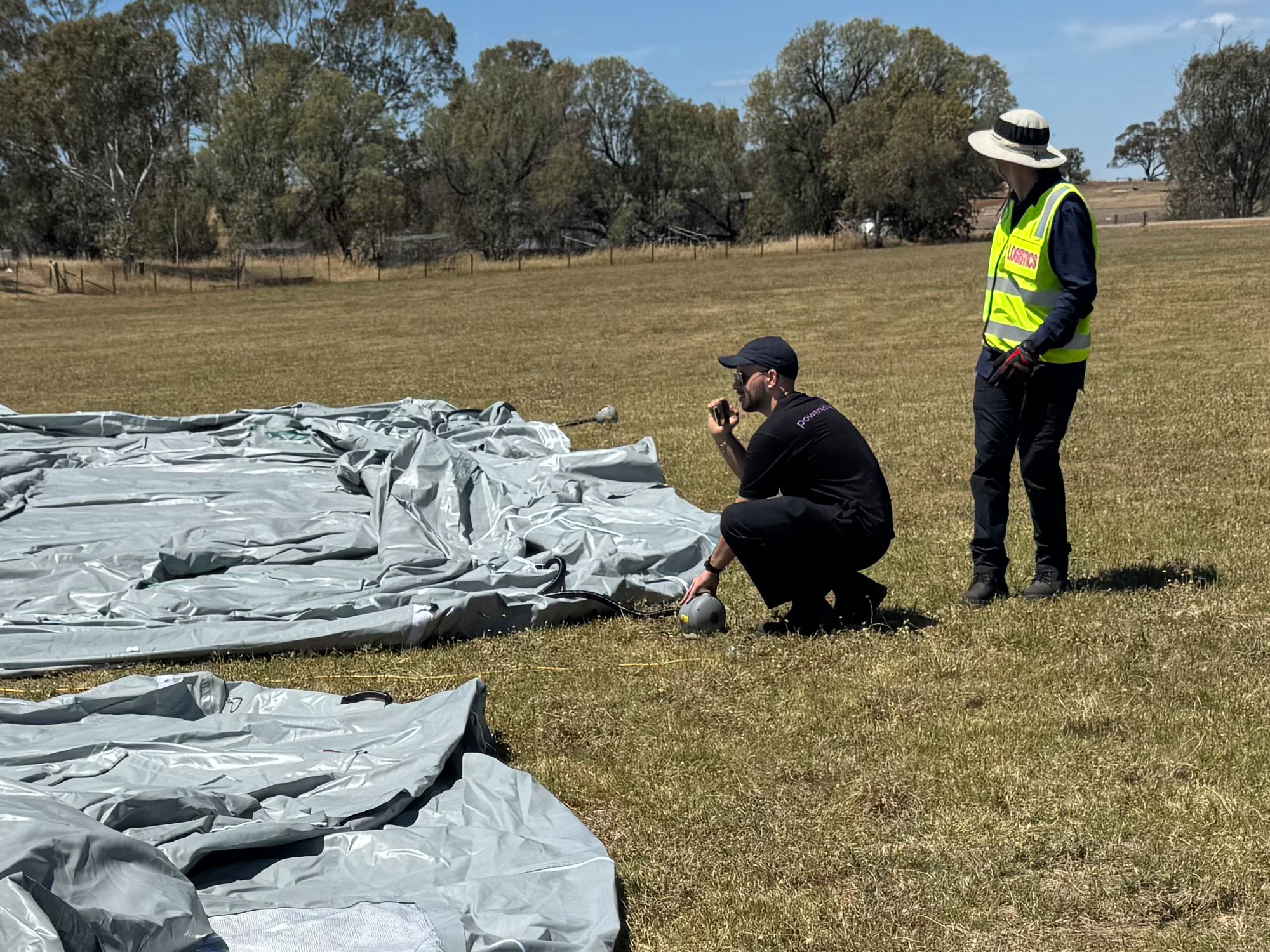
XBeam is designed for quick, simple deployment by a small team with basic training. Even so, a simple system benefits from guidance at the point of use. GII worked alongside WAMAT logistics staff from the warehouse briefing through to final pack-up, covering valve sequences, layout and how units connect.
The results were clear. Each 12 m shelter inflated in under 12 minutes using two pumps, and the 6 m shelter in under five. All three were up in less time than it took to assemble a single conventional aluminium-framed shelter on the same site. At bump-out, the three XBeams were deflated, folded and packed while the team was still working on the first framed unit.
GII demonstrated an organised pack-down sequence (deflation, air evacuation, folding and rolling) that makes the process repeatable. Clearly marked parts, everything on hand and a consistent method mean each shelter returns to a single 110 × 110 cm pallet, with the internal insulation left in place.
Learning From the Teams Who Deploy
Education sessions run both ways. WAMAT management was open about its operational requirements and willing to test whether what works in planning holds up in the field. That openness gave GII direct insight into the conditions WAMAT expects to face.
For Nick Palomares, who leads design work on GII’s shelters and other industrial inflatables, the exercise provided first-hand input for future designs. It also confirmed the areas that matter most in the field: clear deployment instructions, ballasting guidance, wind management, and the anchoring and air-conditioning (HVAC) integration that keep a field hospital stable and comfortable. These confirmations now guide GII’s ongoing documentation and design work.
Real Equipment, Real Conditions
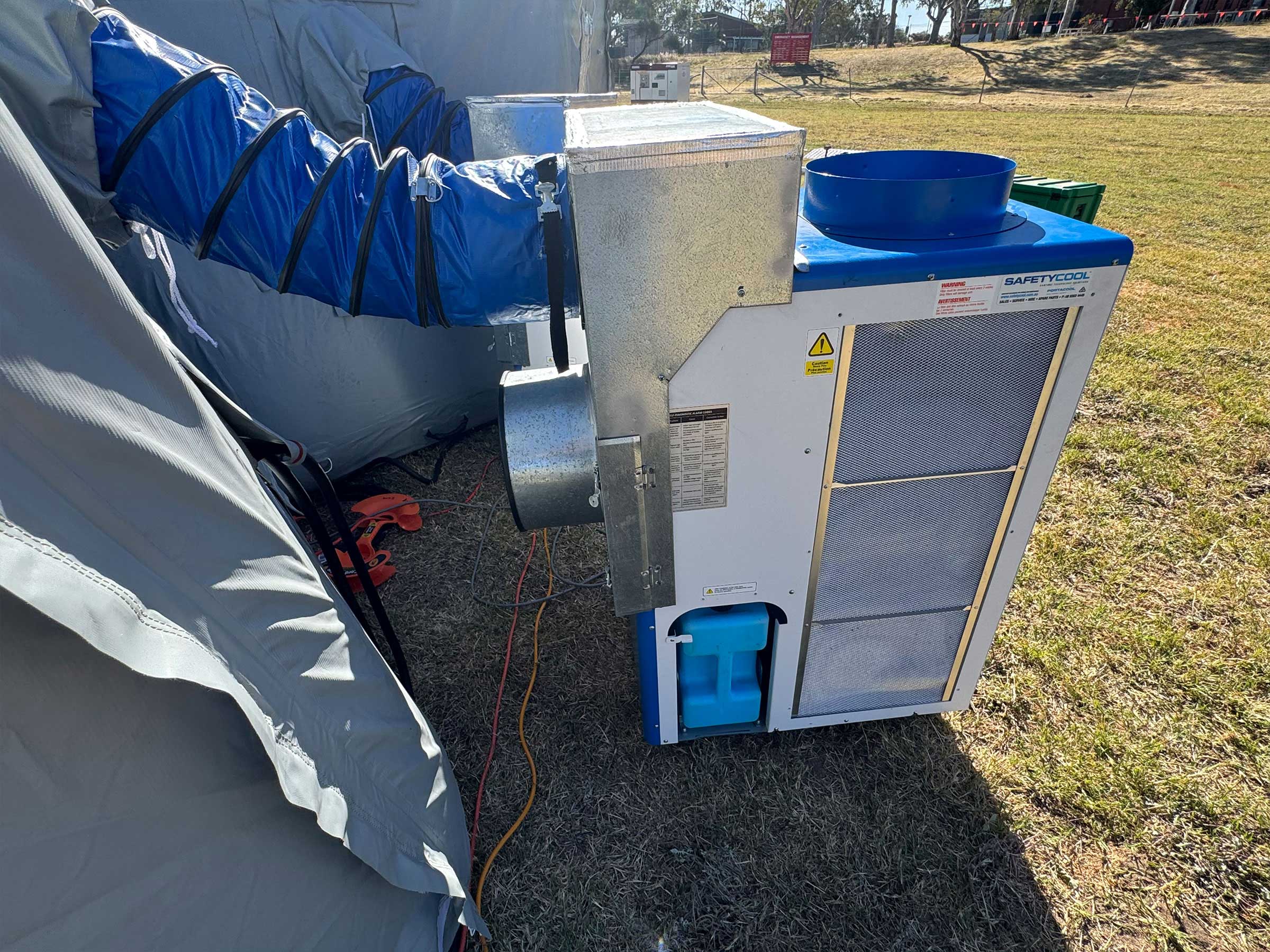
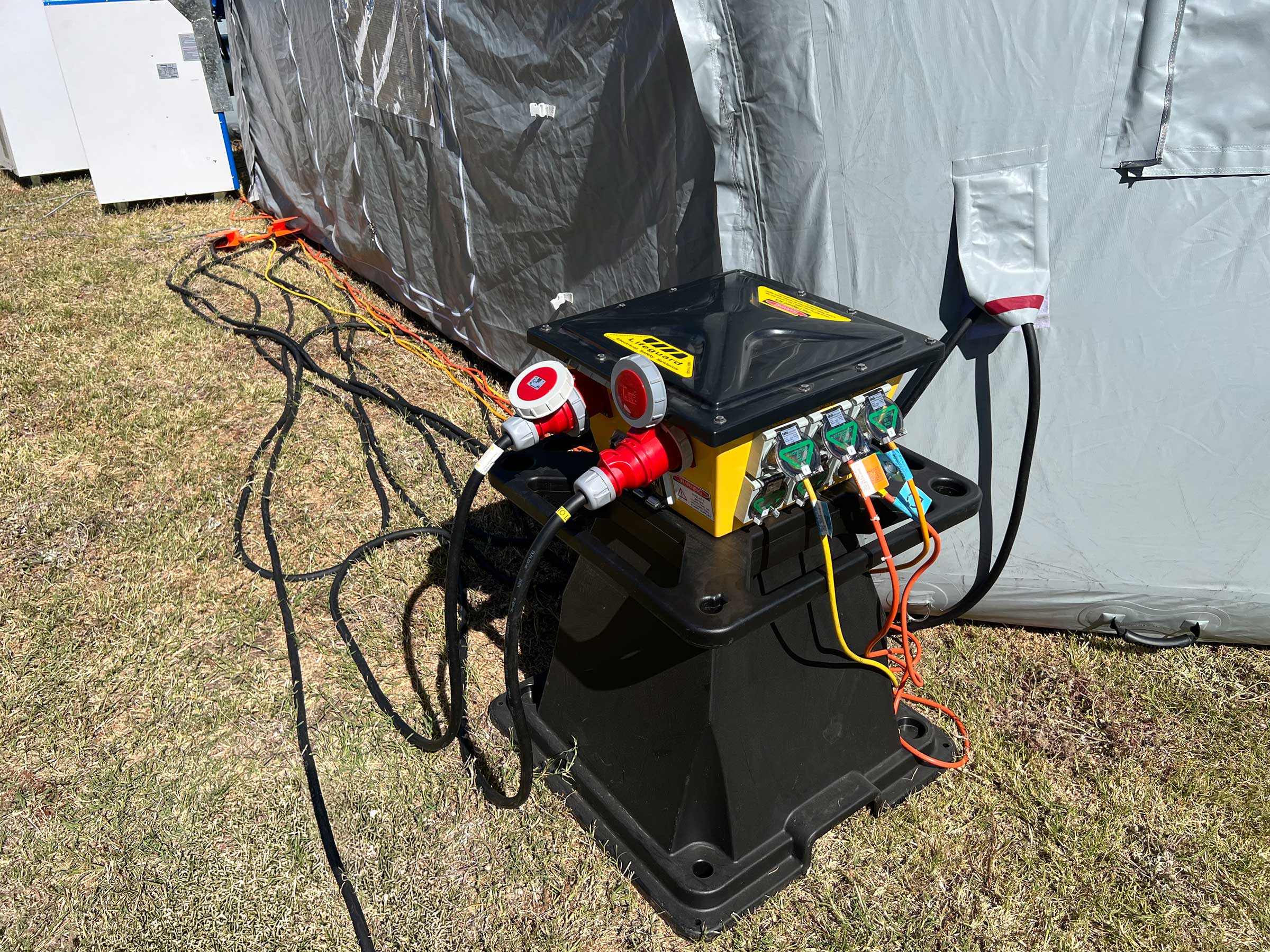
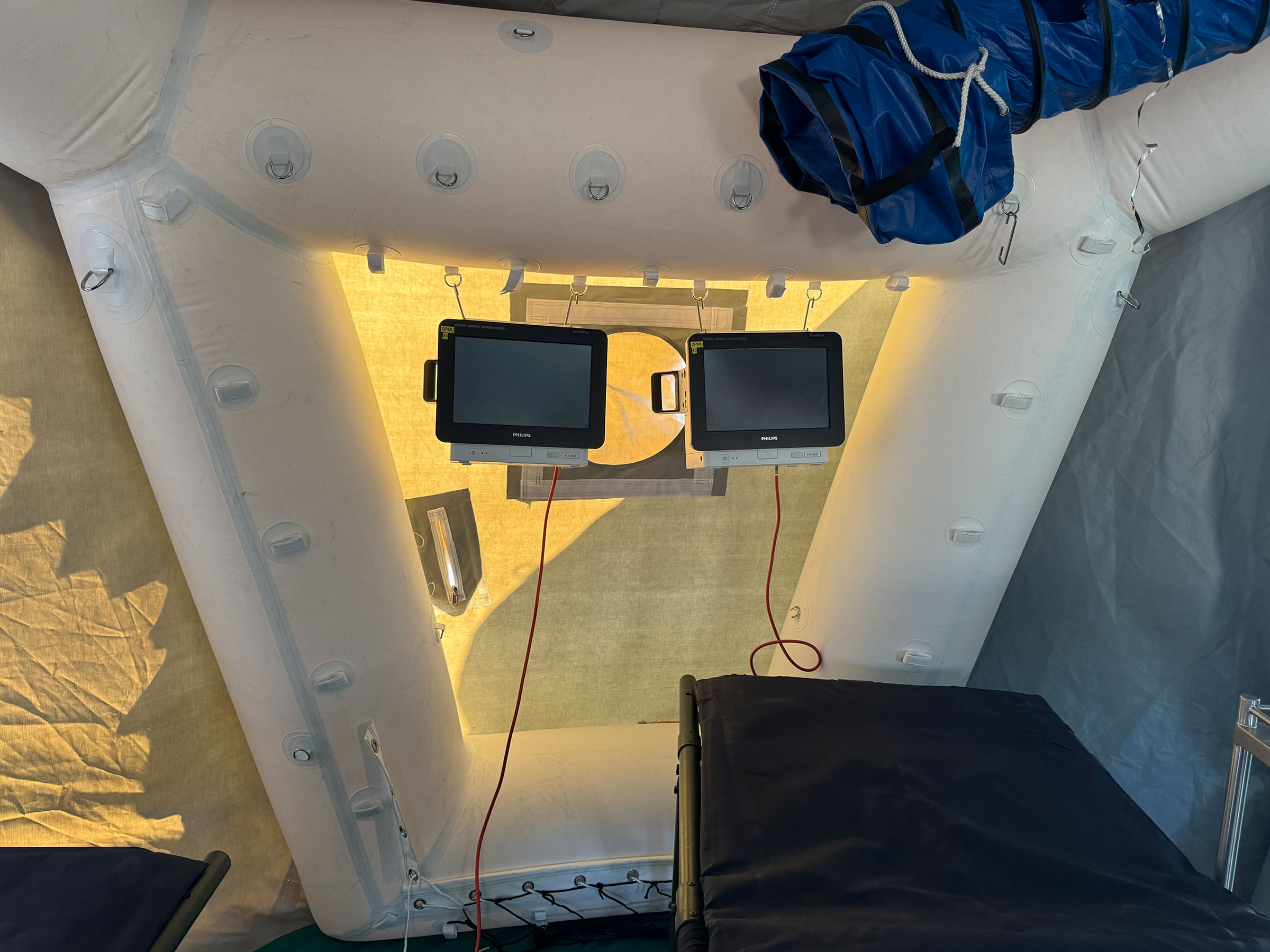
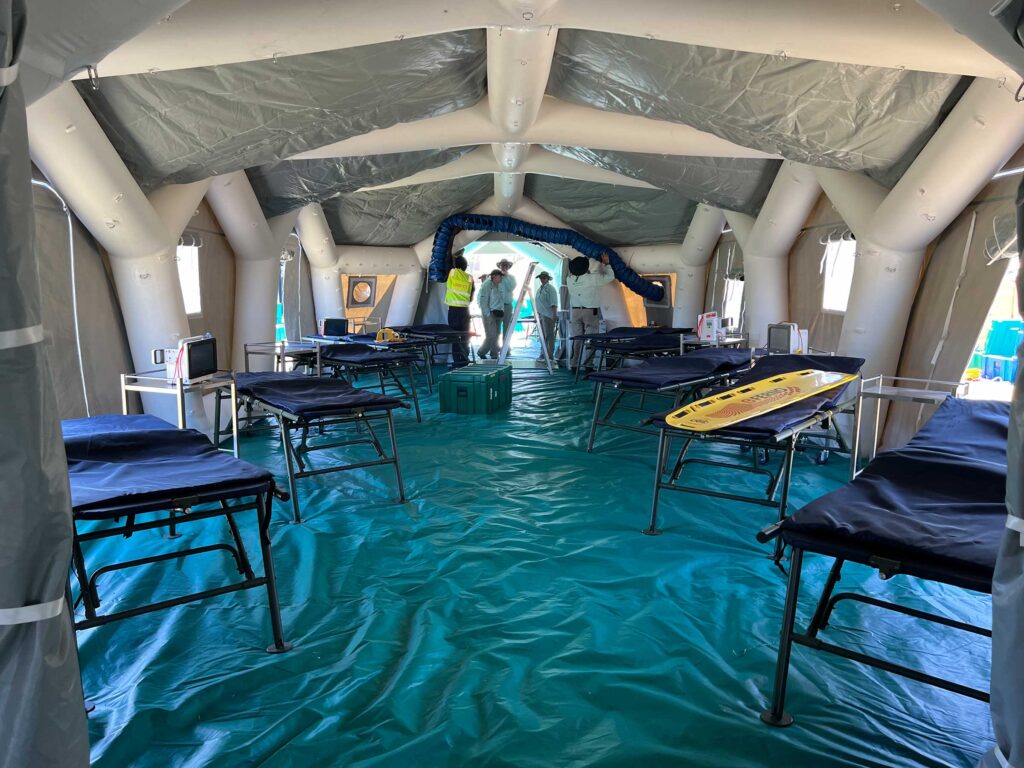
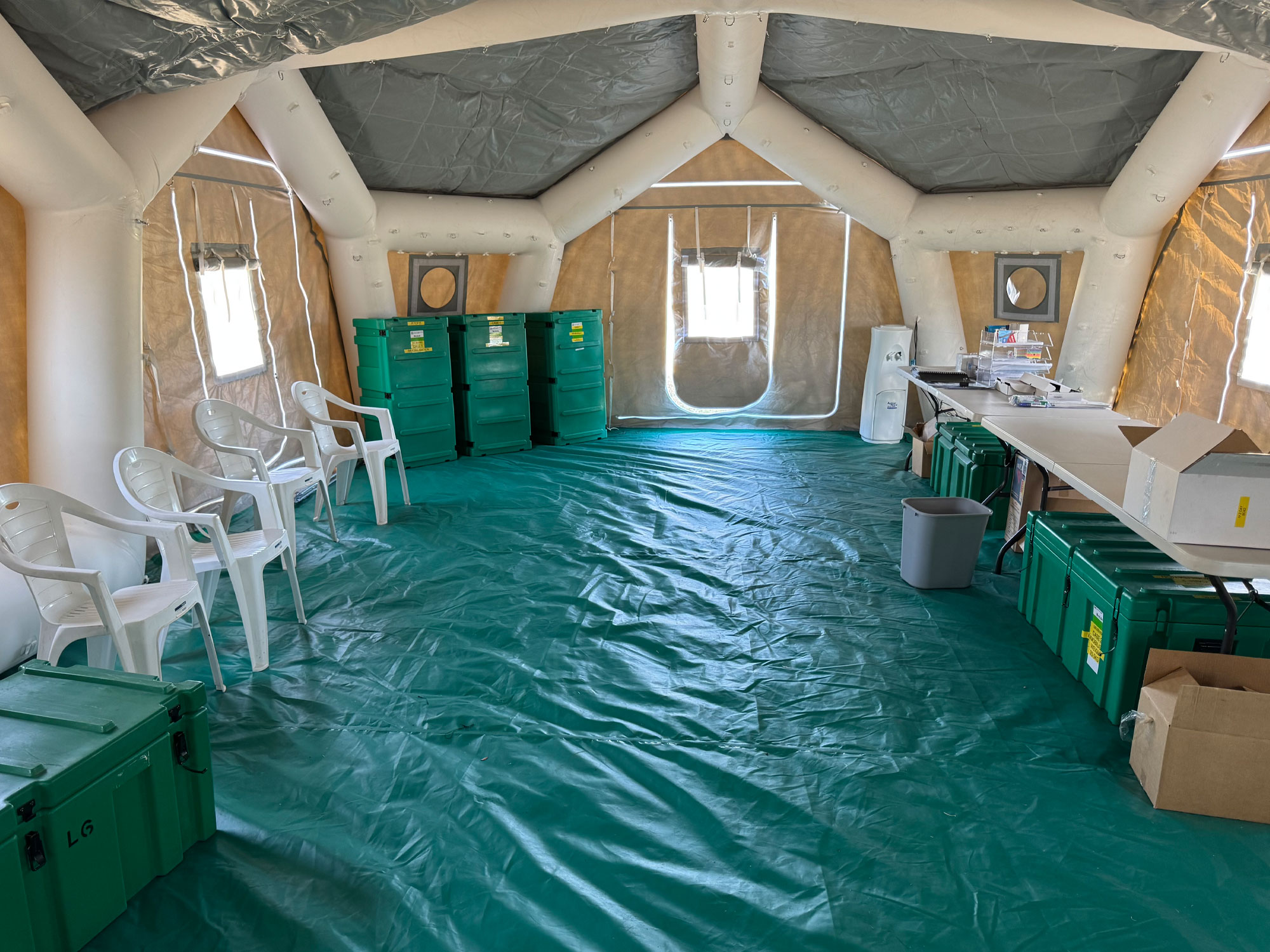
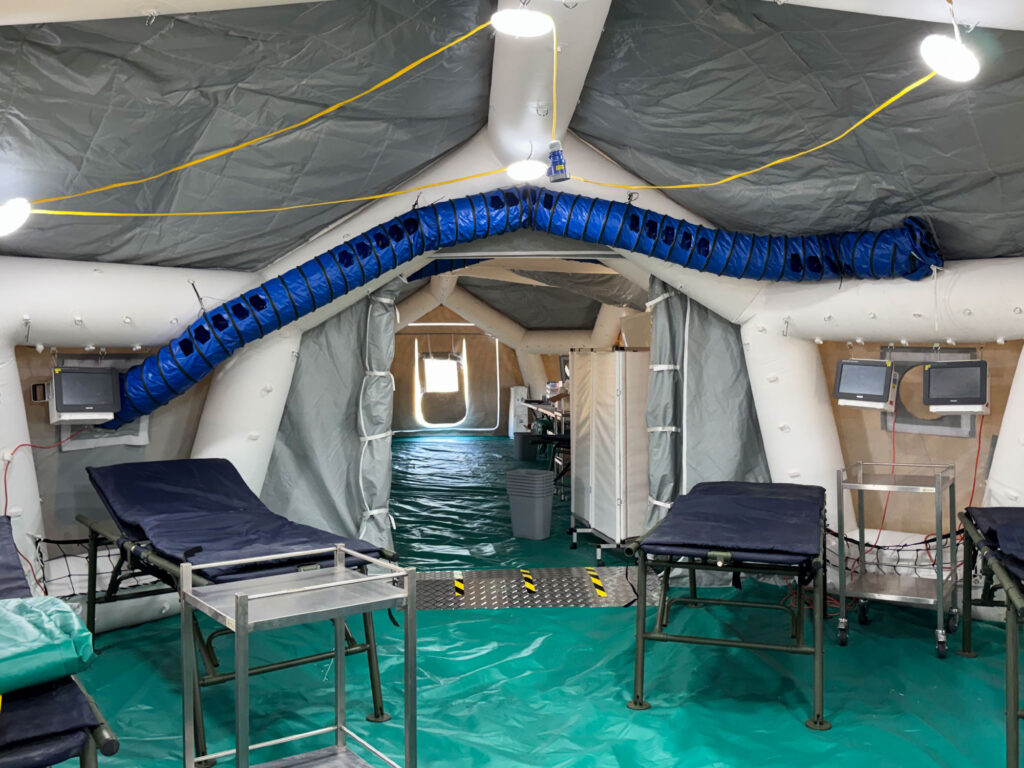
Medical equipment keeps evolving, and shelters need to suit what teams carry today and what they will use tomorrow. At Muresk, GII saw the shelters fitted out as a working field hospital: stretcher beds and trolleys rolled in and out, patient monitors hung from the beam rigging points, supply cases stocked and opened, air-conditioning ducting routed along the frame, and external power connected.
Experiencing the set-up in real time showed how staff move through the space, where equipment sits and how the modular layout can be reconfigured. That understanding helps GII build shelters with maximum flexibility, so they adapt as equipment and clinical needs change.
Part of an Ongoing Education Program
Easy to store, transport and set up
Your partner
Self-Erecting Emergency Shelters
Need information off-line?
Download a PDF for your records in two steps.

Rapid-Deployment Inflatable Medical Shelters for WA Health’s Emergency Response Fleet
When the Government of Western Australia required a rapidly deployable health response solution, Giant Industrial provided a modular inflatable medical shelter system designed for speed, durability, and clinical functionality in the state’s most remote and disaster-prone areas.

Self-Erecting Inflatable Emergency Shelter Serves as Fire Comand Centre
XBeam self-erecting inflatable shelters enable rapid deployment for emergency response, mobile command centres, and medical stations
Need more information?
Contact us. We would love to be apart of your solution.